
The importance of joints in the natural stone floors: material and type and more suitable
Eva Portas Fernández, Technical consultancy area Granite Technology Center www.fctgranito.es
Eva Portas Fernández, Technical consultancy area Granite Technology Center www.fctgranito.es
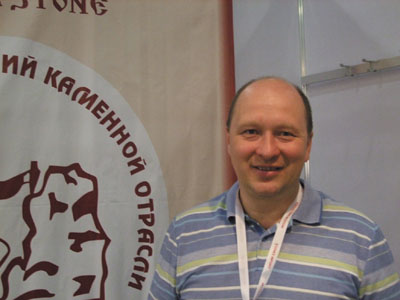
Dmitry Medyantsev, President of Russian STONE CENTER Association
Question.- How many factories and quarries are there in Russia?

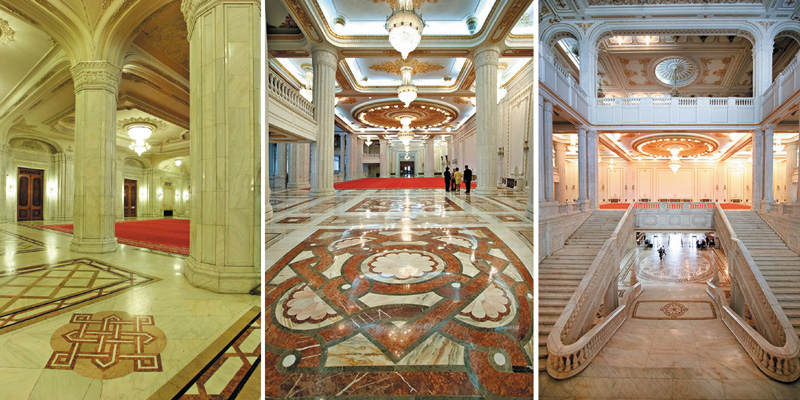
The Parliament Palace in Bucharest (Romania) is no ordinary building. For one, it is considered to be the second biggest building in the world after the Pentagon in USA. There is some history behind it. Originally the project began as a Palace for the Romanian ex-dictator Nicolaus Ceaucescu, it started in the seventies, and the original name he gave was Casa Poporului (House of the People).
Over two years ago this magazine published a survey on multi-wire machines, and the article was well received by our readers. Being a new, evolving technology, during this period the different manufacturers have brought out new, improved models of this machinery, and we have found it appropriate to publish an updated version of the survey. The questions were sent to the different companies and we publish here the replies of those who answered them.
Questions:
1.- Is your machine supported on 2 or 4 columns?
Rogerio Moutinho, MGLW (United Kingdom)
What do architects and designers really look for, when they want to use natural stone?
Without trying to be too simplistic, what one really wants when choosing natural stone for a project is:
1.- A stone with the right colour and pattern
2.- A stone that is suitable or adequate for the purpose, i.e., it is hard enough,not too absorbent, etc.
3.- That the natural stone is fairly easily available, i.e., in the quantity that one requires, and is so within the time frame of the project.
An initiative of WONASA (World Natural Stone Association) www.wonasa.com
Luca Alciati & Laura Fiora
